
The supplement industry has been experiencing exponential growth, and entrepreneurs from all over are eager to launch their own private label brands.
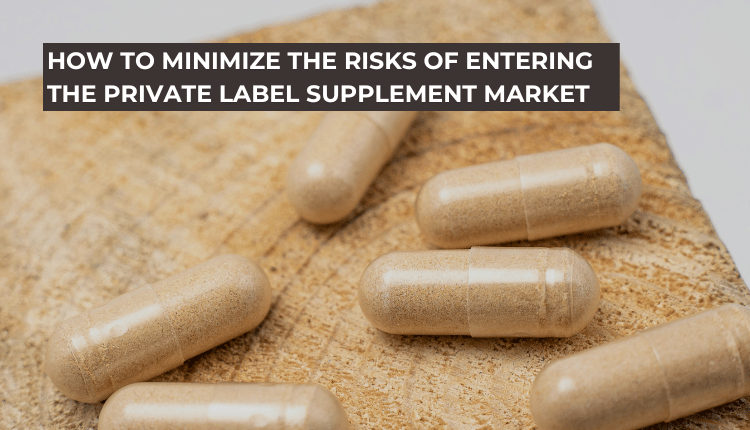
With the rise in demand for vitamins, minerals, and specialized formulas, it’s easy to see why so many people are interested.
But while the potential rewards are high, the risks of entering the private label supplement market are equally significant. Many new business owners jump in without fully understanding the challenges ahead, which can lead to setbacks, lost investments, and even failure.
This article will dive deep into the seven most important risks of entering the private label supplement market.
For each risk, we will discuss what makes it such a threat and then outline strategies to minimize it. By understanding these risks from the start, you can better prepare yourself for success and avoid common mistakes.
Summary
Risk 1 – Regulatory Compliance
One of the biggest risks of entering the private label supplement market is non-compliance with regulations. The FDA (Food and Drug Administration) and FTC (Federal Trade Commission) set strict rules regarding product labeling, manufacturing, and advertising.
Supplements must be safe, and all claims must be truthful and backed by evidence. If your brand makes unverified claims or uses misleading labels, you could face legal issues, fines, recalls, and irreparable harm to your reputation.
This risk is particularly challenging because regulations are not static. They evolve over time, and new enforcement actions frequently target companies trying to cut corners.
For new entrepreneurs, staying on top of regulatory requirements can feel overwhelming, especially if they lack legal or compliance expertise.
Even something as seemingly simple as how you phrase a label claim can put you at risk. For example, saying a supplement “cures” a condition is not allowed without substantial scientific evidence, while wording like “supports” or “may help” can often be acceptable.
These nuances highlight why compliance cannot be taken lightly.
How to Minimize
The best way to reduce this risk is by partnering with a GMP (Good Manufacturing Practices) certified manufacturer that already follows strict compliance standards.
Such manufacturers understand FDA guidelines and help you avoid missteps. In addition, consider consulting with compliance experts to review your labels, marketing materials, and product claims before launch.
Investing in third-party testing to verify product safety and potency also goes a long way in proving credibility. Proactive audits and continuous monitoring are essential—treat compliance as an ongoing process, not a one-time task.
Risk 2 – Quality Control Issues
Another major risk of entering the private label supplement market is poor product quality. Low-quality ingredients, inconsistent dosages, or contamination can ruin your brand’s reputation in a matter of days.
Once customers lose trust in your supplements, it’s nearly impossible to regain their loyalty.
This risk often arises from working with unreliable suppliers or manufacturers who cut costs at the expense of quality. When the supply chain is opaque and ingredient sources are questionable, your brand could suffer.
In addition, different batches of the same supplement may vary if strict quality control procedures are not followed, leading to inconsistent results for customers.
The problem extends beyond reputation damage—it can also become a legal and ethical concern. Selling supplements that harm customers could lead to lawsuits or FDA action.
In the long run, low quality costs far more than investing in quality assurance upfront.
How to Minimize
Choose a manufacturer with a proven track record of quality assurance. Always demand Certificates of Analysis (COAs) to confirm ingredient purity and potency.
Work with partners who conduct third-party testing for every batch to ensure consistency. Consider random independent testing to verify results for yourself.
It is also wise to establish clear SOPs (Standard Operating Procedures) for quality checks throughout the supply chain. By investing in quality control, you’re investing in the longevity of your brand.
Risk 3 – Intense Market Competition
The supplement industry is booming, but that means competition is fierce. There are thousands of brands on the market, from global corporations to small startups.
Entering without a strong differentiation strategy makes it difficult to attract attention. Many entrepreneurs underestimate how crowded the market is, only to find their products buried among countless competitors.
High competition also drives up customer acquisition costs. Paid advertising on platforms like Google, Facebook, and Instagram is more expensive than ever in this niche.
Without a clear branding strategy, you’ll likely struggle to generate sales or end up overspending on ads.
How to Minimize
The solution is to focus on a defined niche rather than trying to appeal to everyone. Instead of generic multivitamins, consider supplements targeting specific demographics like athletes, new mothers, or individuals seeking brain health support.
Develop a unique brand identity through packaging design, storytelling, and customer engagement.
Building authority through content marketing and SEO also allows you to rank organically for important keywords. Over time, this reduces your reliance on paid ads and helps your brand stand out.
Risk 4 – Supply Chain Disruptions
Supply chain disruptions are another critical risk of entering the private label supplement market. Ingredients are often sourced globally, which means geopolitical events, natural disasters, or logistical breakdowns can delay production.
Even minor disruptions can cause out-of-stock issues, disappointing customers and hurting your revenue.
Relying on a single supplier is particularly dangerous. If that supplier fails to deliver, your business grinds to a halt.
Rushed decisions to find replacement ingredients can also compromise product quality. Customers rarely forgive brands that are unavailable or inconsistent.
How to Minimize
Diversify your supply chain by working with multiple vendors for key ingredients. Build strong relationships with your suppliers so that you’re prioritized during shortages.
Keep a buffer of safety stock to cover unexpected delays. Regularly evaluate your supply chain to identify vulnerabilities and address them proactively.
Supply chain resilience ensures your business can withstand disruptions and continue meeting customer demand.
Risk 5 – Misleading Marketing Claims
One of the fastest ways to attract unwanted legal attention is by making misleading health claims. Many supplement brands, especially new ones, overpromise results to win customers.
However, exaggerations or false claims can lead to lawsuits, FDA warnings, and customer distrust.
In today’s digital age, consumers are savvy. They research products, read reviews, and quickly call out brands that overpromise. Misleading claims not only expose you to legal risks but also damage your credibility in a way that’s almost impossible to recover from.
How to Minimize
Focus your marketing on truth and transparency. Use language supported by credible scientific research. Replace exaggerated promises with realistic claims that align with FDA guidelines.
For example, instead of saying your product “cures insomnia,” position it as a supplement that “supports healthy sleep patterns.” Transparent marketing builds long-term trust, and trust is the foundation of customer loyalty.
Risk 6 – Customer Retention Challenges
Acquiring customers is difficult and expensive, but keeping them is even harder. Many brands focus heavily on first-time sales and neglect strategies for retention.
Without loyal customers, you’re stuck in a cycle of constantly spending more on ads to attract new buyers. In the supplement industry, where repeat purchases are common, failing to build retention is a missed opportunity.
Customers are also quick to switch if a competitor offers a cheaper price, better quality, or more engaging brand story. High churn rates make it difficult to sustain growth and profitability.
How to Minimize
Offer subscription models that automatically replenish supplements, ensuring convenience for customers. Implement loyalty programs and rewards to encourage repeat purchases.
Provide excellent customer service with fast response times and helpful solutions. Go beyond selling products by creating educational content such as guides, blog posts, and newsletters.
By positioning your brand as a trusted resource, you build stronger connections that lead to long-term loyalty.
Risk 7 – Financial Mismanagement
Financial mismanagement is a silent killer for many private label supplement businesses. Entrepreneurs often underestimate the upfront costs of manufacturing, marketing, compliance, and logistics.
They may also scale too quickly without the necessary cash flow to sustain growth. These mistakes create financial strain that can sink a business before it ever becomes profitable.
Cash flow problems are particularly dangerous. A delay in product delivery can tie up your funds, leaving you unable to pay suppliers, employees, or marketing expenses.
Without careful financial planning, even strong sales numbers can’t save a business from collapse.
How to Minimize
Develop a thorough financial plan before launching. Include realistic projections for costs, revenue, and cash flow.
Set aside a contingency fund for unexpected expenses, and avoid overextending your budget in the early stages.
Work with financial professionals who understand e-commerce and supplements. Monitor key metrics like profit margins and customer acquisition costs regularly. Disciplined financial management keeps your business healthy and sustainable.
How CapsExpress International Helps You Navigate These Risks
Managing all of the risks of entering the private label supplement market on your own can feel overwhelming.
That’s where CapsExpress International comes in. As a trusted partner, CapsExpress provides full-service solutions to guide entrepreneurs through every stage of the process.
From product formulation and GMP-certified manufacturing to compliance, packaging, and logistics, their team ensures you avoid costly mistakes.
CapsExpress International has the expertise to help you stay compliant with FDA and FTC regulations, maintain product quality through rigorous testing, and establish resilient supply chains.
Instead of navigating the risks alone, CapsExpress International equips you with the tools and support needed for long-term success. Whether you’re just starting or scaling your brand, their end-to-end services help minimize risks and maximize growth.
Final Thoughts
The risks of entering the private label supplement market are real and should not be underestimated. From compliance and quality control to competition, supply chain challenges, marketing, retention, and financial management, every stage presents potential pitfalls.
However, each of these risks can be effectively minimized with proper planning, reliable partnerships, and disciplined strategies.
By understanding these challenges upfront, you can prepare your supplement brand for success instead of reacting to problems after they occur. With the right approach—and the guidance of industry experts like CapsExpress International—you can enter the market with confidence. Instead of seeing risks as barriers, you can treat them as stepping stones to building a trusted, profitable, and enduring brand.

